
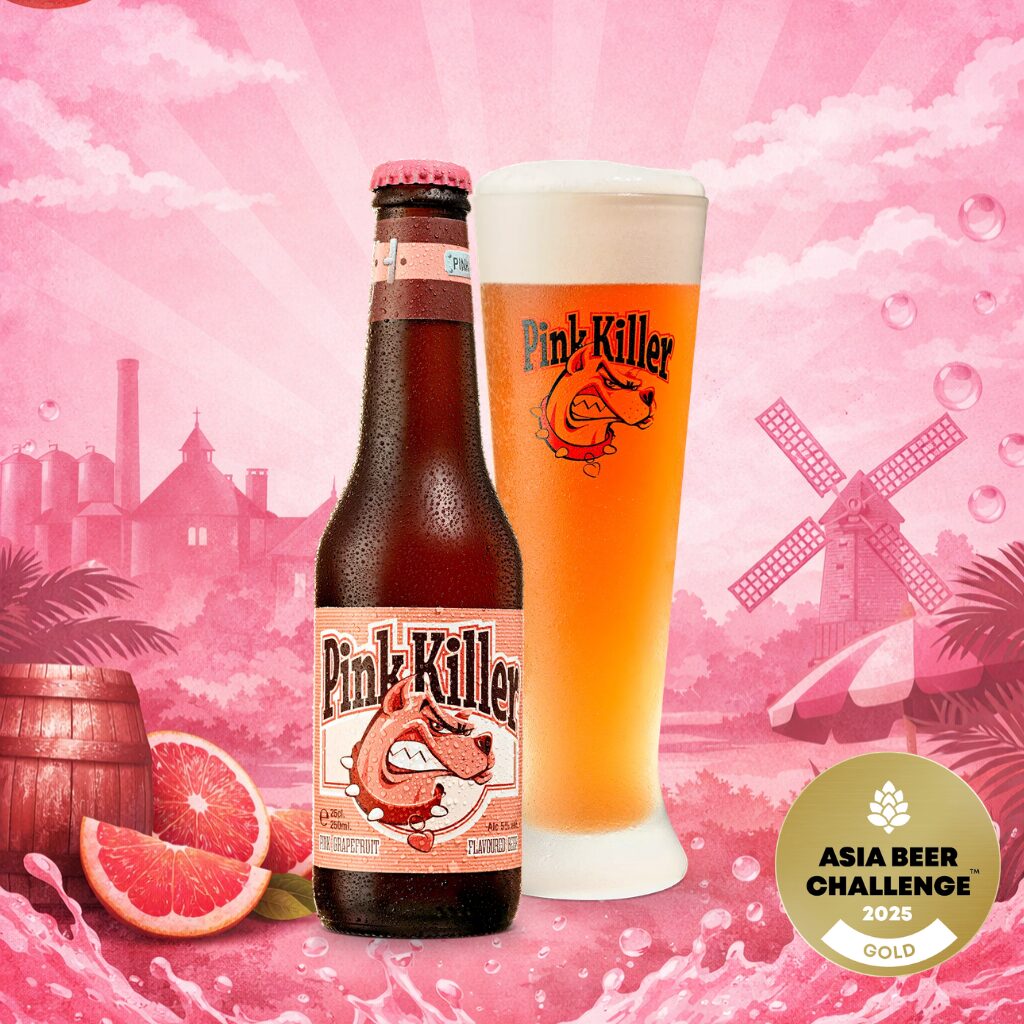
In 2002, Brasserie de Silly took a bold step by launching a pink, grapefruit-flavored beer—something unheard of in the Belgian brewing world at the time. Bertrand Van der Haegen, representing the fifth generation of brewers at Silly, sensed a shift in consumer tastes and decided to create something new: fresh, accessible, and flavorful.
The result was Pink Killer, a visually striking, fruit-forward rosé beer that helped launch a new category. More than two decades later, it remains a reference point in the world of flavored and rosé beers.
A Bold Creation by Bertrand Van der Haegen
At the start of the 2000s, the Belgian beer market was dominated by traditional styles—blondes, brunes, and triples. But a growing demand for innovation and lighter flavors pushed Bertrand Van der Haegen to craft something unexpected: a white beer brewed with natural pink grapefruit juice.
The outcome was surprising—a pale pink, slightly hazy beer with a fine head, rich citrus aroma, and refreshing taste. The name “Pink Killer” reflected its dual nature: soft and fruity, yet bold enough to challenge the norm.
A Strong Identity That Stands Out
The beer’s unique identity plays a key role in its success. The label features a pink wolf—playful, fierce, and clearly different. This bold visual sets the tone for a product that doesn’t blend in.
Technically speaking, Pink Killer sits at 5% ABV, making it light and easy to drink. It appeals to both seasoned craft beer drinkers and curious newcomers. It pairs well with appetizers, exotic cuisine, or citrus-based desserts.
The recipe has remained unchanged since 2002, a testament to its balanced flavor and long-standing popularity.
👉 View the official product page
A Pioneer in the Rosé Beer Segment
Back in 2002, the idea of a rosé beer was nearly unheard of. Fruit beers existed—mainly cherry or raspberry—but they were often overly sweet.
Pink Killer introduced something new: a dry, citrus-forward profile with a natural fruit character and a refreshing finish. Its success opened the door for the rise of rosé and fruit-forward beers in the years that followed.
The beer appealed to a wide audience—young adults, cocktail lovers, and curious tasters—and quickly became a source of inspiration for other brewers.
A Belgian Beer That Went Global
From the beginning, Pink Killer found a market beyond Belgium. Its light flavor, unique look, and approachable profile made it an ideal export. Today, it’s enjoyed across Europe, Asia, and North America, appearing in festivals, specialty bars, and curated retail selections.
It’s also a hit on social media, especially for its eye-catching design and playful character.
Still Relevant, Two Decades Later
Over twenty years after its debut, Pink Killer remains as current as ever. It’s not just a trendy beer—it’s a product with staying power.
Its success lies in:
- A recipe that remains true to its origins
- A strong, recognizable visual identity
- A commitment to innovation without sacrificing authenticity
It continues to inspire and lead in the fruit beer category, solidifying its place in Belgium’s modern brewing scene.
Also explore: