In just a few years, the way we choose our beer has completely changed. We no longer just want to consume more, but to savour better: a more natural beer, kinder to the planet, sometimes even without a single drop of alcohol, yet never at the expense of taste. Organic, alcohol-free, short supply chain: these three trends are no longer niche. They are reshaping the beer aisle and shaking up habits that are generations old. The good news: a Belgian brewery founded in 1850 has already taken all three seriously.
2026: the year we savour “better” rather than “more”
The underlying trend is mindful consumption. Today’s consumer reads the label, cares about where the ingredients come from, about the carbon footprint of their glass and the real impact of what they buy. That doesn’t mean giving up the pleasure: it means choosing products that make sense. Beer, the sociable drink par excellence, sits right at the heart of this movement. And three product families are driving growth: organic beer, alcohol-free beer, and local, craft beer.
Organic beer: far more than a label
An organic beer isn’t just a green logo on the bottle. It follows a demanding set of rules: grains (barley, wheat) and hops grown without synthetic pesticides or fertilisers, with controlled traceability from field to glass. You can taste the result: cleaner flavours, a more expressive malt, a beer that truly “tastes” of its ingredients.
Brasserie de Silly understood this early: it offers 4 organic beers, including Be Silly, its alcohol-free star with a distinctly hoppy taste. The Silly Bio is a certified organic blond pils at 5% ABV. Clear, crowned with an airy white head, it plays the card of mastered simplicity: malty and lightly hopped notes, a biscuity touch, then a thirst-quenching, slightly tangy finish. The Silly Triple Bio, a top-fermented Triple, seduces with its aromas of apple, banana and honey, its balance between freshness and warmth, and its yeasty notes. The Silly Saison Village, a light and refreshing regional beer, pays tribute to the rural brewing tradition with its spicy notes and lively character.
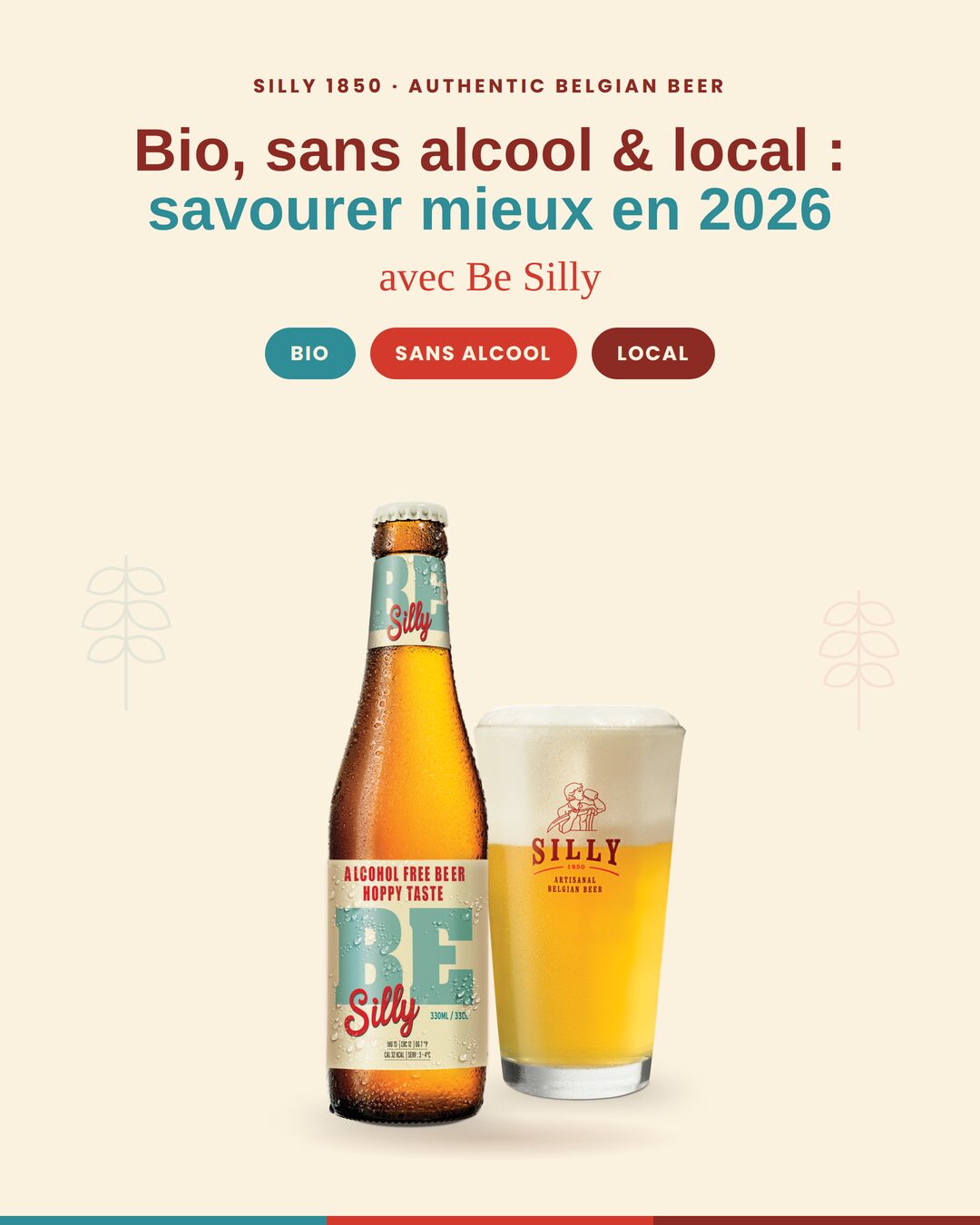
And finally, Be Silly: an organic alcohol-free beer (0.3%), light, refreshing and 100% pleasure with no compromise.
These 4 organic beers prove that a beer can be both responsible and perfectly flavourful.
Alcohol-free is no longer a punishment
This is perhaps the sector’s most spectacular revolution. Long reserved for the “designated driver” and dismissed as bland, alcohol-free beer has become a deliberate choice, even among lovers of fine beers. People choose it to stay behind the wheel, to keep a clear head, for sport, during pregnancy, or simply to enjoy a good time without excess.
Technically, a beer is called alcohol-free when it contains less than 0.5% ABV. To get there without sacrificing the aromas, brewers use sophisticated processes (controlled fermentation, reverse osmosis, vacuum distillation or low-temperature evaporation) that remove the alcohol while preserving the sensory qualities. The body, the hops and the bitterness stay intact.
That is exactly the bet behind Be Silly, the new alcohol-free beer from Brasserie de Silly. Hoppy Taste guaranteed, it is designed for those who love the character of a real Belgian beer but want to enjoy it at any time of day. A launch that marks a milestone: the house, faithful to its traditional recipes since 1850, proves that innovation and craftsmanship are not at odds.
Savour local, commit to sustainable
The third pillar of 2026’s beer: local and sustainable. In the age of the short supply chain, a Belgian beer brewed in Belgium by a family business has a head start on anonymous industrial brands. Provided, of course, that the commitment is real.
At Silly, it is, with the figures to back it up. The 320 tonnes of spent grain produced each year are repurposed as livestock feed. 400 solar panels, installed since 2018, generate 100 MWh a year, cutting energy consumption by 25% and CO₂ emissions by more than 60 tonnes. The brewery recovers its yeast residues, captures the CO₂ from fermentation, relies on deposits for bottles and kegs, and favours short supply chains. A member of the Belgian Family Brewers, it brews more than 15,000 hectolitres a year, a human scale, the opposite of mass production.
Be Silly: the alcohol-free beer that gives up nothing
Organic, alcohol-free, local, sustainable: on its own, the Brasserie de Silly range illustrates everything beer is moving towards today. And Be Silly is its most telling symbol. A Belgian beer, hoppy, full of character… but alcohol-free. Something to celebrate with others, at noon as in the evening, without the slightest compromise on pleasure.
Be Silly is already available on the Brasserie de Silly e-shop as well as in partner bars and points of sale. To discover it live, the brewery will be at the Belgian Beer Weekend, from 4 to 6 September 2026, on the Grand-Place in Brussels, stand no. 16. Free entry, come and taste Be Silly and chat with the team.
In short
The beer of 2026 aims to be more natural, lighter and more local, without ever sacrificing taste. With its Be Silly alcohol-free and its organic range, Brasserie de Silly, with more than 170 years of know-how, already ticks every box of mindful consumption. Savouring better is possible. And it even tastes rather good.
FAQ
What’s the difference between an organic beer and a regular beer?
An organic beer is brewed with grains and hops from organic farming, without synthetic pesticides or fertilisers, with controlled traceability. That’s the case for the Silly Bio, an organic blond pils at 5% ABV.
Does an alcohol-free beer really contain 0% alcohol?
A beer is called “alcohol-free” when it contains less than 0.5% ABV. Processes such as reverse osmosis or controlled fermentation remove the alcohol while keeping the aromas, as with Be Silly, which contains only 0.3% alcohol.
Where can I find Be Silly?
Be Silly is available on the Brasserie de Silly e-shop as well as in partner bars and points of sale. You can also taste it at the Belgian Beer Weekend, from 4 to 6 September 2026, stand no. 16 on the Grand-Place in Brussels.